
Perhaps I was thirteen or even younger when the BBC aired the wonderful drama series Colditz. I found it absolutely engaging. As I was born in 1959 the war didn’t affect me, I was not even a post war baby really. That being said reminders of the war were all around me. In the comics we read like ‘The Hotspur’ and ‘Eagle’ Around the areas I grew up in. We even played on still derelict bomb sites. To us as kids they were just places to go get dirty and be happy. Play War Games or Robin Hood. It didn’t matter to us, we could be as loud as we liked and nobody cared. There was only one rule really. Come home when you’re hungry or the street lights come on, which ever was the later..!
But Thursdays were different, Thursday night was Colditz night. Home early washed and scrubbed, tea eaten and a good spot claimed on the floor in front of the TV ready for the awesome theme tune. Those Kettle Drums just did it for me…!
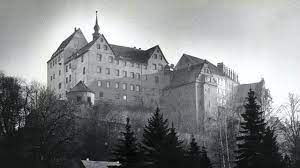
I was totally absorbed by the series, those Thursday nights became a ritual. Then came the cherry on the top. The Colditz Movie. Though made in 1955 I didn’t get to view it until it was shown one Christmas about 1974 on the TV. Again even though I knew the story and the protagonists I was amazed by the movie. It was around this time that my Birmingham Library card was upgraded from Child to Adult. That gave me the all clear to access any books in the library and one of the first non kids books I took out was Pat Reids ‘Escape from Colditz.’ Then ‘Colditz the full story’. And for balance I read ‘Colditz the German Story’ by Reinhold Eggers.
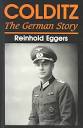
The more I saw and read the more I sought out information on Colditz Books, Magazine articles, Photos. It did not quite become a hobby, though I would say I had a keen interest in all things Colditz. It was around this time that I had decided that I was going to by Hook or by Crook get to visit Colditz.
Now we must jump forward a good twenty five years. And the British military have decided to post me to Berlin. Deep in the heart of Germany. However as luck would have it the wall was still up. My daily activities in Berlin put me regularly in the East of the City. Sadly we military types had to return though Checkpoint Charlie before midnight. So any trip to Colditz was a non starter. Ahh, but I could dream..! One day maybe. All I need is a bit of luck and Colditz would be in my grasp. It wasn’t that far from Berlin only 228.2 km. Come on stay positive! Pat Reid and Winslow successfully crossed into neutral Switzerland from Colditz a distance of 788.0 km. While being hunted by the Gestapo.
Jessica Sorensen once wrote “Life is full of luck, like getting dealt a good hand or simply by being in the right place at the right time. Some people get luck handed to them, a second chance, a save. It can happen heroically, or by a simple coincidence,” My luck came in from a very odd corner. It was in the shape of East German spokesman Günter Schabowski.
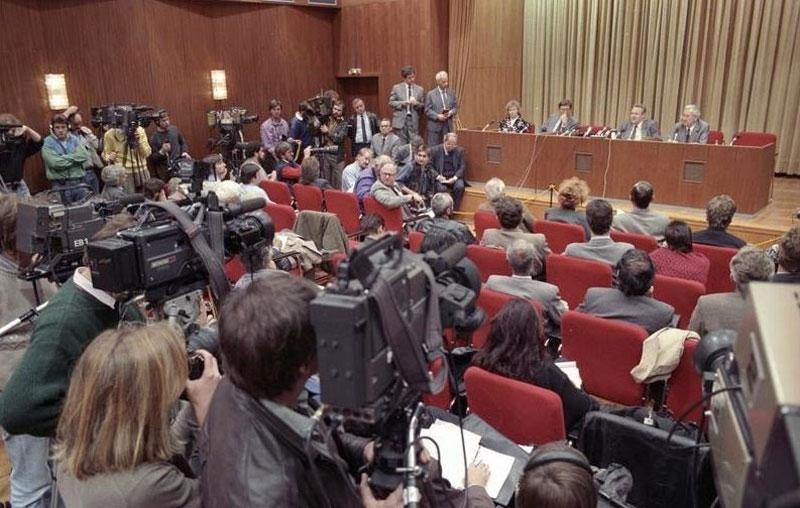
At a press conference on 9 November, East German spokesman Günter Schabowski was handed a Paper to announced that East Germans would be granted freedom to travel into West Germany. Luckily for myself and the East German population Günter didn’t have time to completely read and understand what he had. So when asked by the press when would this free travel be implemented. Dear Günter said immediately . He also failed to clarify that some regulations and restrictions would remain in place.
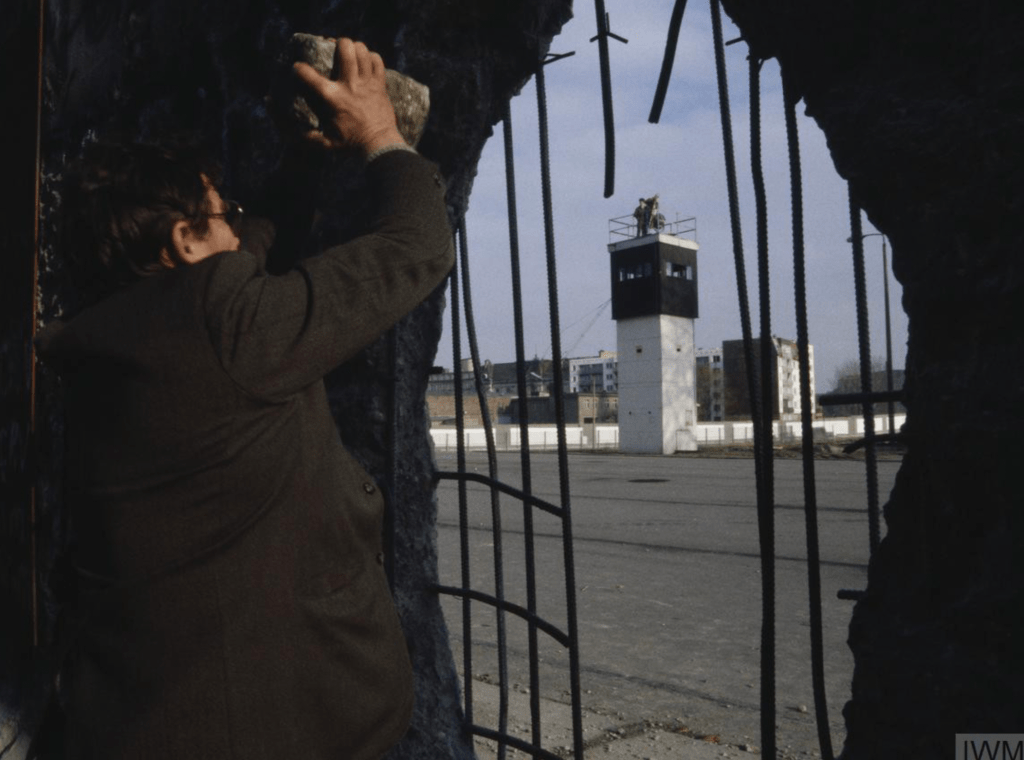
Western media inaccurately reported that the border had opened and crowds quickly gathered at checkpoints on both sides of the Wall. Passport checks were eventually abandoned and people crossed the border unrestricted. East and West Berliners came together in celebration. The fall of the Berlin Wall was the first step towards German reunification.

And just like that the largest obstacle to me getting to Colditz was breached over night. It was truly an amazing event one I am very proud to say I shared. Personally the event swept over me like a wave. Even now many years later I have vivid recollections of parts of that wonderful moment, though other bits seem clouded at the back recesses of my memory.
Here is my memory of that great day. The 9th of November seemed fairly normal for me. It was a Thursday, dry but the air had a chill to it. I had spent the afternoon climbing at the Teufelsberg. An open air climbing venue called ‘the Devil’s Mountain‘ in English. It is a non-natural hill in Berlins Grunewald forest. It rises about 80 metres above the surrounding plain. The hill is made of debris and rubble from the bombed out buildings of the war, and covers an unfinished Nazi military-technical college (Wehrtechnische Fakultät). During the Cold War, there was a U.S Listening Station on the hill, ‘Field Station Berlin.’
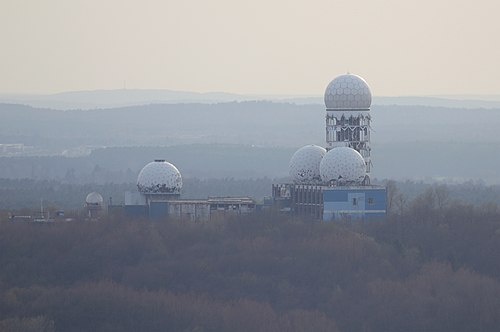
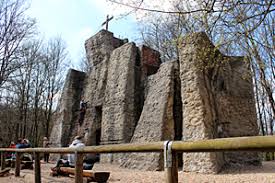
It was gone Five O’clock in the evening when the two lads and I decided to finish climbing. The sun was now covered by cloud and it was decidedly chilly. The ideal time to head back to Camp. I was hungry and fancied a beer. Once in the land-rover and heading out of the forest. I asked the lads if they would not mind placing the climbing gear outside my office as it would be safe there. And dropping me off at the Zoo and I would grab some food and a beer and see them tomorrow. They were happy to drop me off and continued their journey home to wives and hot suppers. Half a Chicken and Chips from the Imbiss just outside the Zoo main entrance and then I crossed the road and was soon seated on a bar stool with a nicely chilled beer.
It may have been during my first beer or perhaps after a few. I just don’t recall when but all of a sudden there was a heated commotion at the door of the bar. At that time my German wasn’t great, but I had enough to understand what the guy was shouting to the non believers in the Bar. He was adamant that the wall was down. This was no Drunkard. He was a serious determined individual and he was spreading the news as unbelievable as it was..!
Well my first thought was that 5 Shock Army, some of Mother Russia’s finest soldiers had breached the wall and were in the process of trying to smash Western Berlins Imperialistic overlords.
Well the reason my Battalion was stationed in Berlin and had been training for four years. Was for this very moment. I never in my wildest dreams thought it might happen. But train for it we did. There really was only one course of action for me, that was to Hot Foot it back to camp as soon as possible. Get into uniform and present myself ready to defend imperialism.
So that’s exactly what I didn’t do…! I paid my bill then swiftly walked the hundred meters or so to the nearest underground station and jumped on the next tube to Check Point Charlie.
On surfacing at the Kockstrasse station what I saw just blew me away. There were thousands upon thousands of people singing and shouting and screaming over each other. Bottles of wine and all manner of Spirits were being passed around. People would take a swig and just pass the bottle on. This was not 5 Shock Army Invading..! This was a party, and I mean the biggest party ever..!
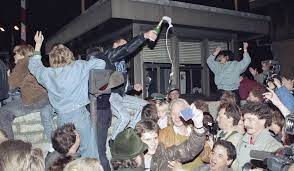
It took me several hours sometimes walking with the crowd sometimes against it to get the kilometre and a half to the Brandenburg Gate. Here in front of the wall was a large open area. Bigger area way more people..! The noise was unbelievable but it was a happy noise. A euphoric noise. A cheer would start off in the distance and sweep though and over the crowd enveloping all beneath it..! Until another came from a different direction. I have no idea how or when I got back to camp, but I did and I was happy. I had witnessed something special. Like the world having a Birthday, or its Graduation. I had witnessed something great and shared it with the other hundreds of thousands of fellow humans that can say “Ich bin eine Berliner..!”

Now fate is a wicked mistress. some time you may even feel that she is actively conspiring to ruin your plans. Or just that she has a devious side to her and wants to spoil your day or whole life..! Just as things had become easier for me to travel to Colditz I was permanently posted to the southern most bit of Germany. Bavaria a cheeky little 723.5 km south from Berlin. Colditz would have to go on hold..!
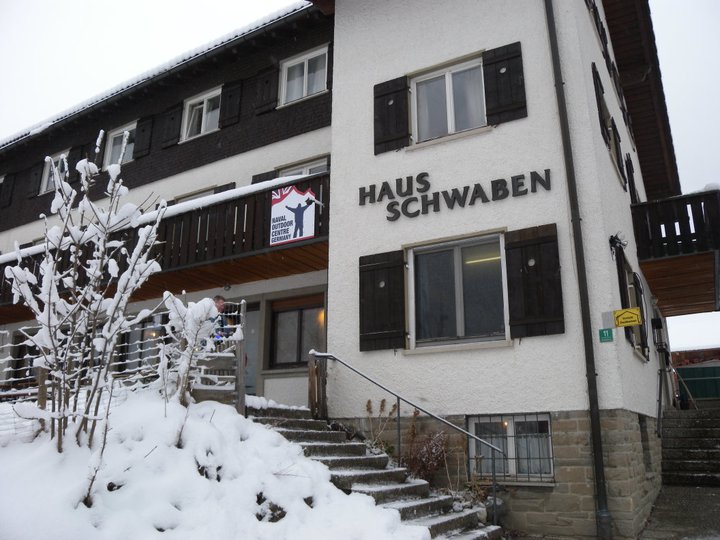
My time down in Bavaria was well spent. I with the militaries help became very qualified in the adventure training world. I met my second wife, had two more lovely children Colin and Sydney. Opened a hotel and ski school. Ran that for several years then converted it into The Naval Outdoor Center Germany. The most landlocked Navel Training Establishment. Who’s goal was to train The Sailors and Marines of our wonderful Royal Navy.

It was while all this was going on that my daughter Sydney had finished her schooling and was preparing for the job market. She had decided to become a beautician. I don’t know much about the world of ‘Make Up’, nor its application as I see it as a Dark Art…! But there are courses in this Witch Craft, where the spells and usage of potions are passes down to young ladies and men with dodgy hormones..! These courses are held in Dresden. As Sydney was only a young girl she would need a driver and chaperone. Now Dresden is only 79.8 km from Colditz. Were the stars beginning to aline? Could the Colditz trip be back on..?
A great wordsmith…. it could have been me… once wrote. ‘Great endeavours are destined to be. It just takes us a couple of tries to get there sometimes.’ Though the point I’m trying to make is never give up on your dreams. Even if you have nothing. You still have Hope..! Once you have hope anything is possible.
Sydneys course was finalised, hotels booked. It was time to program the GPS and get this show on the road. Sonthofen to Dresden is a six hour, 588 km journey. I have nothing of great note to report on our journey north. I had a flask of coffee, some butties. Syd’s choice of music is similar to mine and she laughs at my jokes, so the trip to Dresden went rather smooth if some what long. Before night fell we were settled into our respective accommodation, watered and fed and ready for sleep.
The daily procedure in Dresden was rather easy for me, as I wasn’t studying. We would rise, meet for breakfast. Take the short walk to the lecture hall. Where I would leave Syd until her lunch break. I would then join her for lunch, escort her to the hall again and entertain myself till around six in the evening when Syd would be finished. Supper at a nice restaurant then back to our Hotels. The following day rinse and repeat..!
While Syd was busy learning the female equivalent of Face Camouflage. I had hours to kill. Dresden had been a very old city. It was the capital city of the State of Saxony. Dresden had a long history as the capital and royal residence for the Electors and Kings of Saxony, who for centuries furnished the city with cultural and artistic splendour. It was once the family seat of the Polish Kings and Queens . The city was known as the Jewel Box, because of its baroque and rococo city centre. That was until Bomber Harris had his way. On the night of 13–14 February 1945, 773 RAF Lancaster bombers dropped 1,181.6 tons of incendiary bombs and 1,477.7 tons of high explosive bombs on the unsuspecting city, targeting the rail yards at the centre of the city.
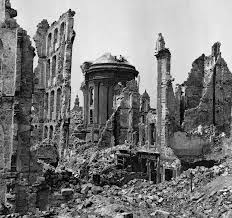
The inner city of Dresden was largely destroyed. The high explosive bombs damaged buildings and exposed their wooden structures, while the incendiaries ignited them causing a fire storm. American author Kurt Vonnegut‘s novel Slaughterhouse Five is loosely based on his first-hand experience of the raid as a POW.
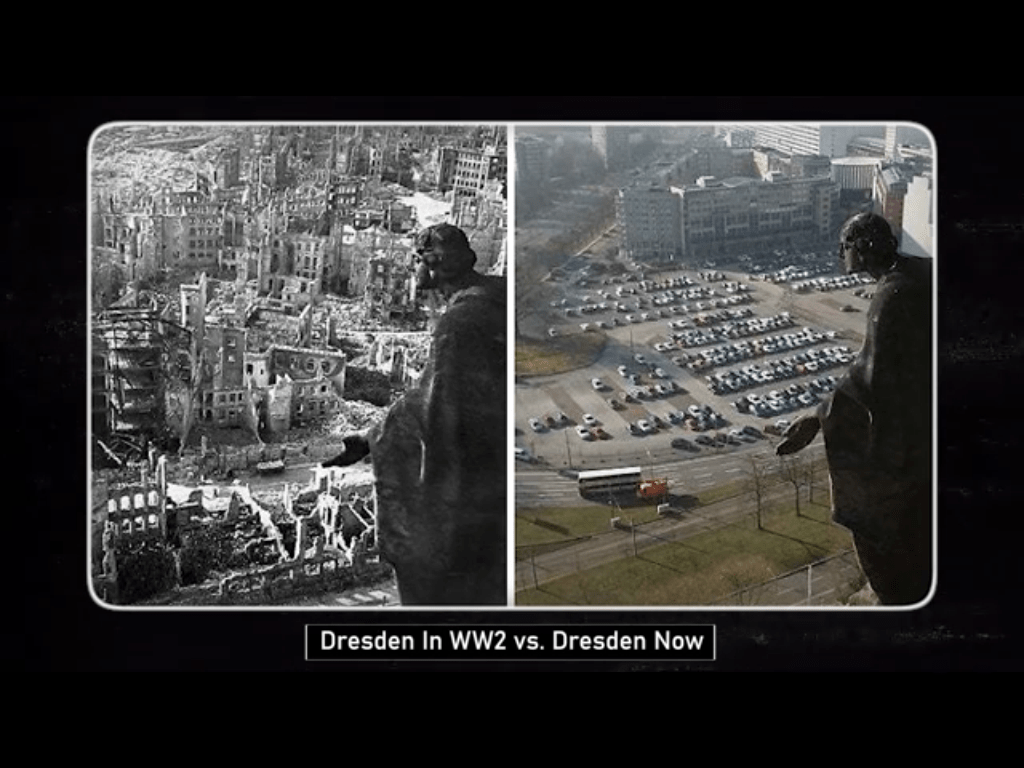
The damage from the air raids was so bad that after the end of the Second World War a light railway system was constructed to remove the debris, though being a makeshift system there were many derailments. This little train track had seven lines, employed 5,000 people and had up to 40 trains, all of which had women’s names. The last train remained in service until 1958, though the last official debris clearing team was only disbanded in 1977. Today Dresden is a phenomenal place to visit and explore.
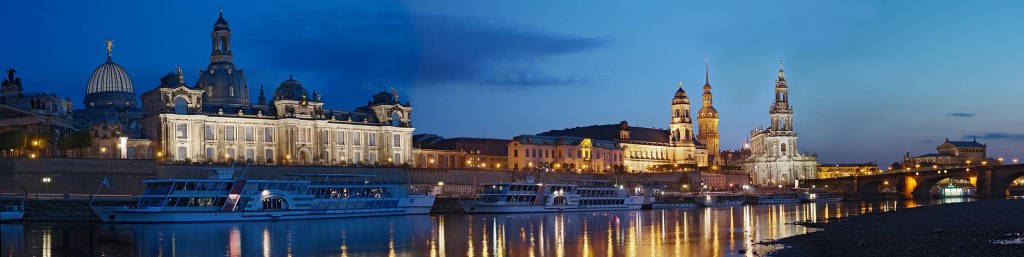
Many truly historic buildings were just too damaged to save. So were razed to the ground. But valiant efforts were put into saving the Ständehaus, the Augustusbrücke, the Kreuzkirche, the Zwinger, the Catholic Court Church, the Semperoper, the Japanese Palace and the two largest train stations. Some of this work dragged on for decades often interrupted by the overall economic situation in the GDR. The ruins of the Frauenkirche were allowed to remain on Neumarkt as a memorial to the war. Post re-unification great effort was put into significant reconstruction of the Neumarkt area.
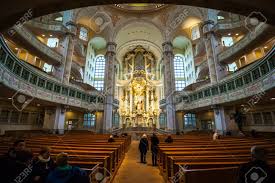
For me the greatest achievement was the restoration of the Dresden Frauenkirche, a Lutheran church, the rebuilding of which was started after the reunification of Germany in 1994, was completed in 2005, a year before Dresden’s 800th anniversary, notably by privately raised funds. The gold cross on the top of the church was funded officially by “The British people and the House of Windsor.”

I spent my first days just taking in the splender that is Dresden It is now a clean modern city with so much to see. Every thing from quaint little street stalls to the great Fürstenzug—the Saxon sovereigns depicted in Meissen Porcelain.

Once a pattern had formed, and Syd was comfortable with her routine. Over supper I Explained my plan to visit Colditz. Seeking reassurances from Syd that she could survive a lunch break without me. Once my mind was at ease I decided to visit Colditz the next day.
I have heard of people being so excited they could burst. Or not being able to sleep because of thoughts racing around in their minds. To be honest I’m not like that. I slept like a baby. Was I excited yes very much so, but I wanted to capture and absorb this once in a lifetime event. Soak up every little thing I could, truly bathe in this wondrous moment. Not run around like some over excited child. Sleep covered me like my favourite blanket and I slept the sleep of the just.
Breakfast with Syd was quite normal, we had both by now worked out our routines. Syd was more orange juice and muesli. Myself a couple of buns with ham and cheese and lashings of coffee.
As usual I walked Syd to her venue, made sure she was comfortable having lunch without me, then said farewell. I strolled back to my hotel with an unusual spring in my step. I fired up the car. Entered Colditz into the Satnav and was away.
It was on..! Something that was a childhood dream was now rushing towards me at a comfortable 65 km’s an hour along the A14/ Route 176. I recall passing through a couple of towns but my focus was on Colditz. So I have very little to report on the towns of Nossen, or Dobeln. Nossen could have been a Mirror of Colditz, as it has its own castle. But without the Garrison-able infra structure to man it. Dobeln had a castle in its own right, but fared badly thought history, with fires, and the sacking of the town. Most of the castle ruins were used to help rebuild the town after the last great fire. And fortunately for the town it surrendered to the Russians in WW2 without a shot being fired, so still hold a wonderful old German beauty.
Had I more time I would have loved to explore these enchanting places. But Colditz awaited..!
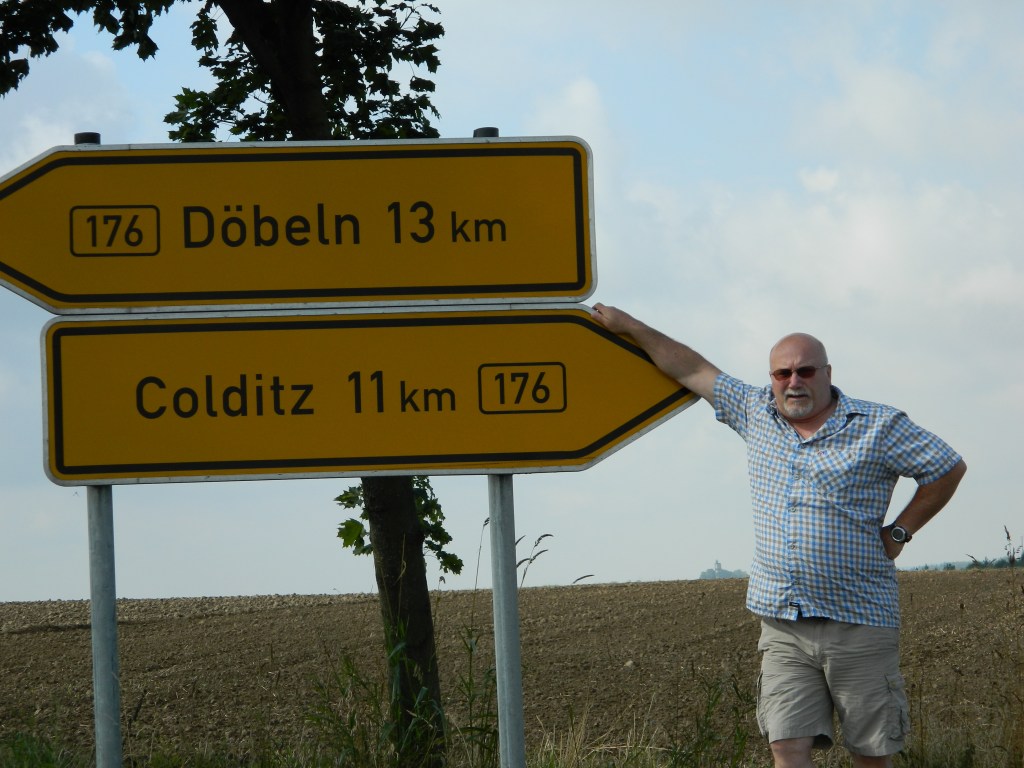
My approach brought me in from the south, and even before I had parked I could see the beautiful castle up on the hill to my right. I parked fairly close to the castle at Gasthaus Colditz. For no reason other than there was free parking.
During WW2 most arrivals were via the train station and a short walk to the Castle main gate under German guard. Looking up at the castle it would have been a foreboding experience. My short walk up the cobbled walkway to the main gate was less daunting. It was while engaged in this perambulation that I had a shocking realisation.
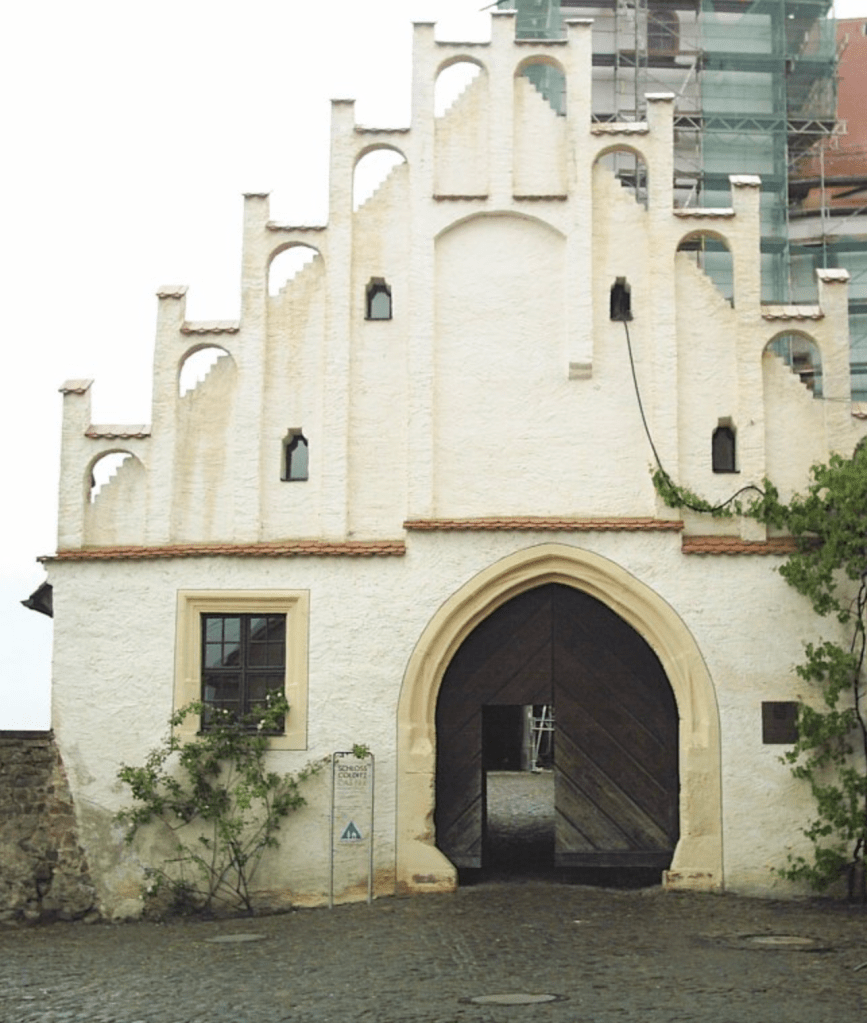
In my joy at finally getting to achieve my childhood dream. I had at no time looked on the internet or completed any research into if the castle at this particular moment in time was actually open for visitors. There was for a brief moment, a tiny nagging thought that I had done all this in vain.!
The approach up the cobbled walk way is not long, it takes but a moment and you are there, a mere mortal before the huge foreboding gates. As I took my final steps it was with a real deep sigh of relief that I saw the small door in the main gates was open.
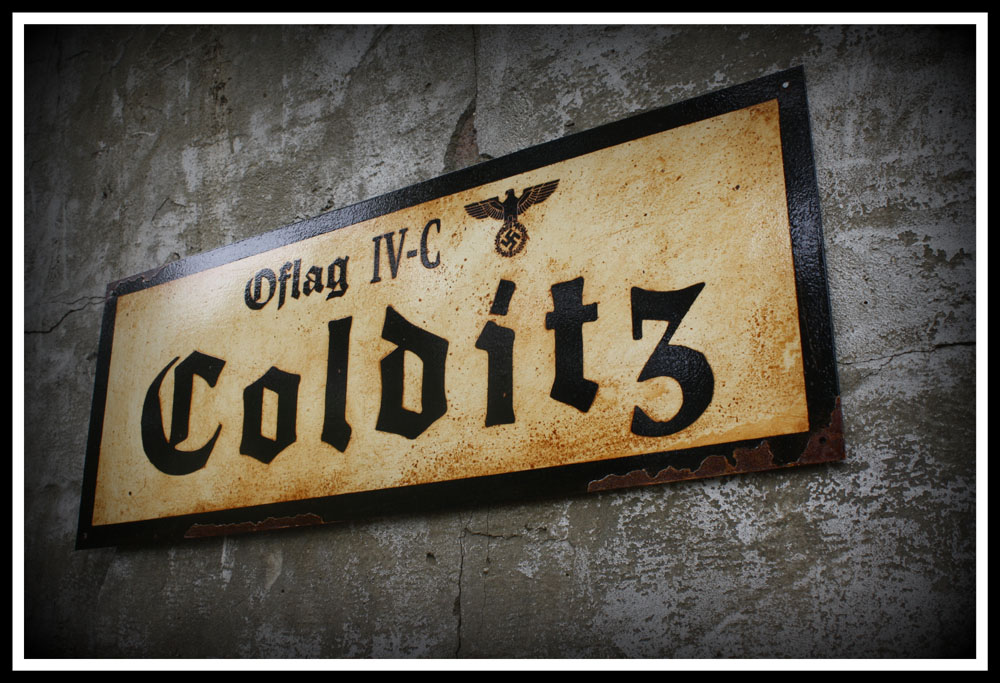
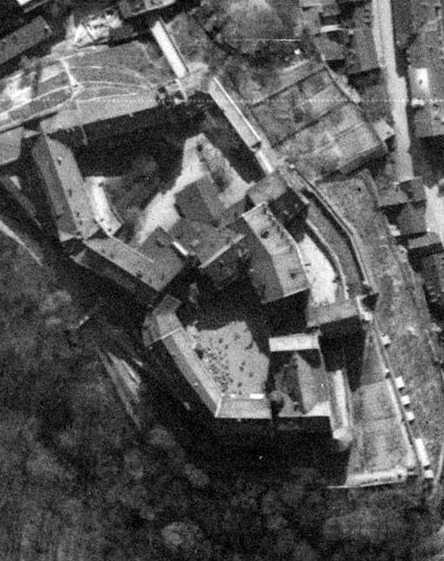
Well at least I could say I had entered the castle…! With the feeling of a naughty schoolboy opening the door to the Headmasters office I pushed the door open, not knowing what to expect. As I took my first tentative steps into( Oflag IV-C) Officers prison camp 4C. I was surprised to find that I was in a large tunnel. This led to the larger outer courtyard in front of the Kommandantur (commander’s offices) which had only two exits and while the castle was a prison housed a large German garrison.
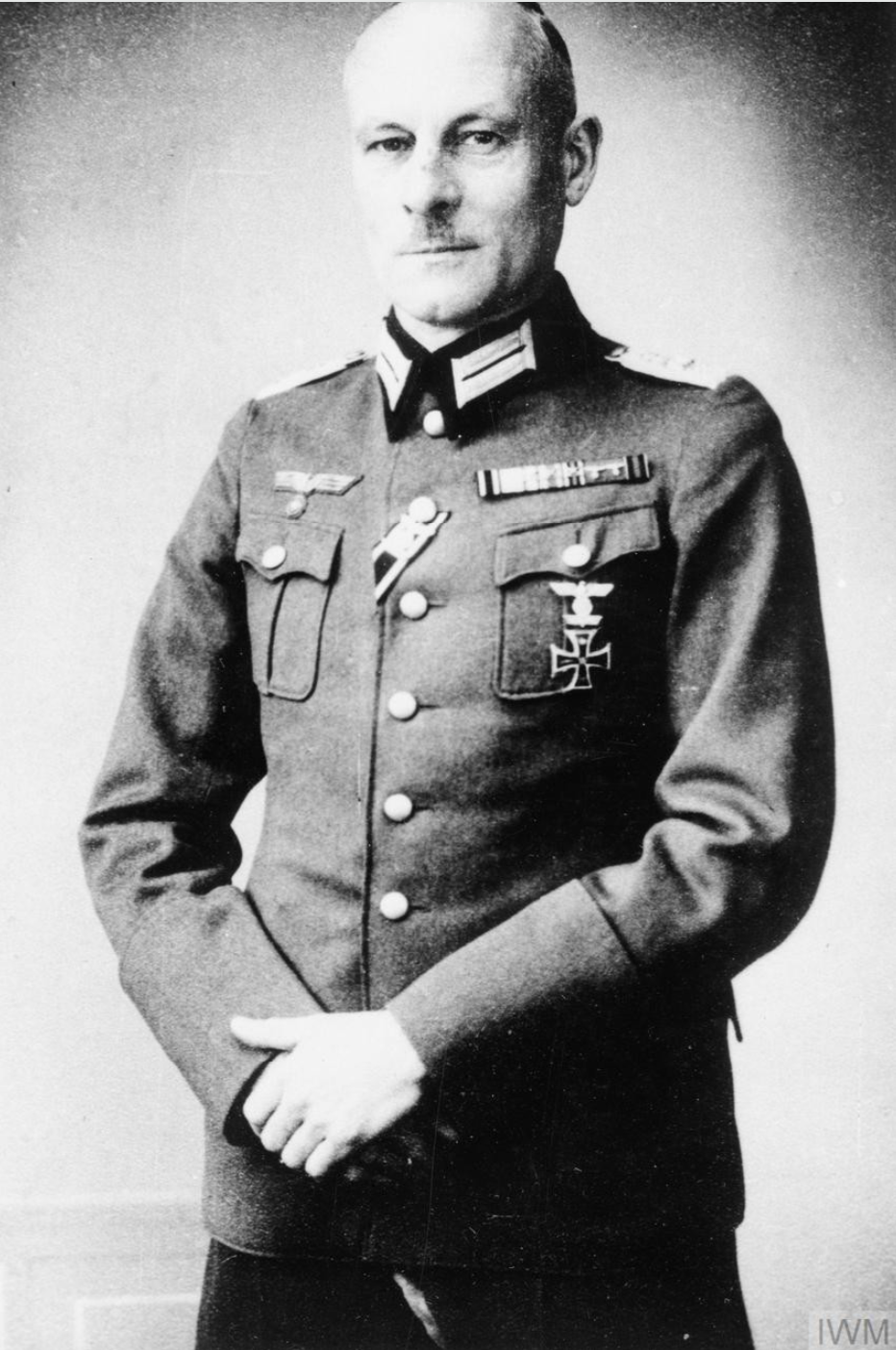
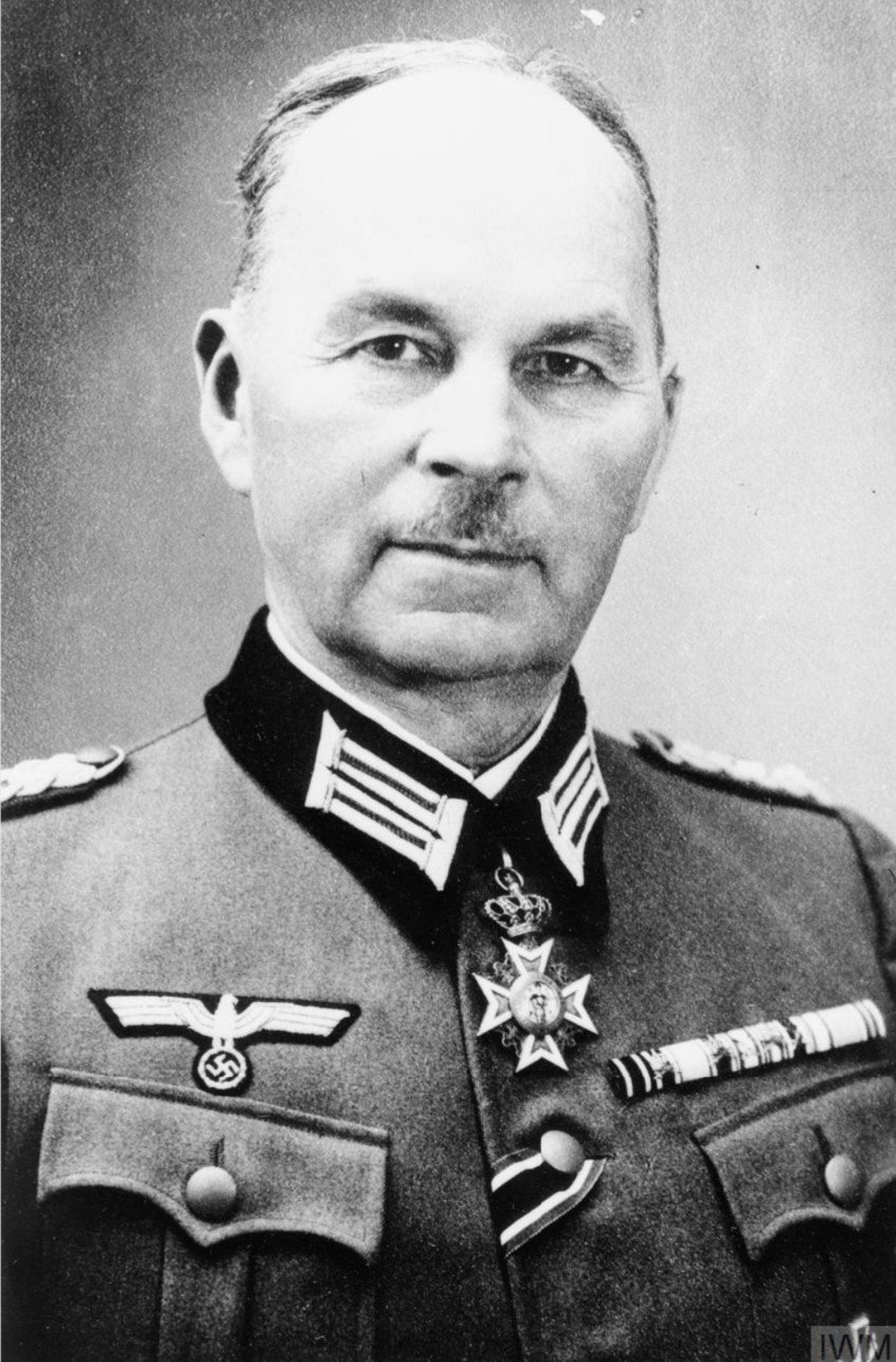
Colonel Glaesche, Commandant of Colditz, 1 August 1942 – 13 February 1943.
If you carry on walking you approach the second large gate and enter the prisoners area for real. It’s here that I found out that the castle was open for visitors and guided tours were available. A very nice lady explained that the next English tour was in about an hour and a half. She booked me on the tour gave me my ticket, explained that I was free to tread the stairwells and corridors as much as I liked. I was also acquainted with the location of the Coffee Shop. Things were getting better by the second..!

With so much to see, and so many things that I felt were important to see where do you begin? For me I walked into the main courtyard stood in where I felt was the centre and for several minutes I soaked in the historical atmosphere.
In my mind Pat Reid. Airey Neave, Britains first home run. Douglas Bader. Charles Upham the only combat soldier ever to receive the Victoria Cross twice, and David Sterling the founder of the SAS. The Poles, the French, the Belgians and the Americans. They were all here. Though only in spirit..! But they were here. It is estimated that over 4,000 British and Allied personnel escaped or evaded capture across Europe during the Second World War. At Colditz, there were more than 30 successful escape attempts including ten by British and Commonwealth Officers.
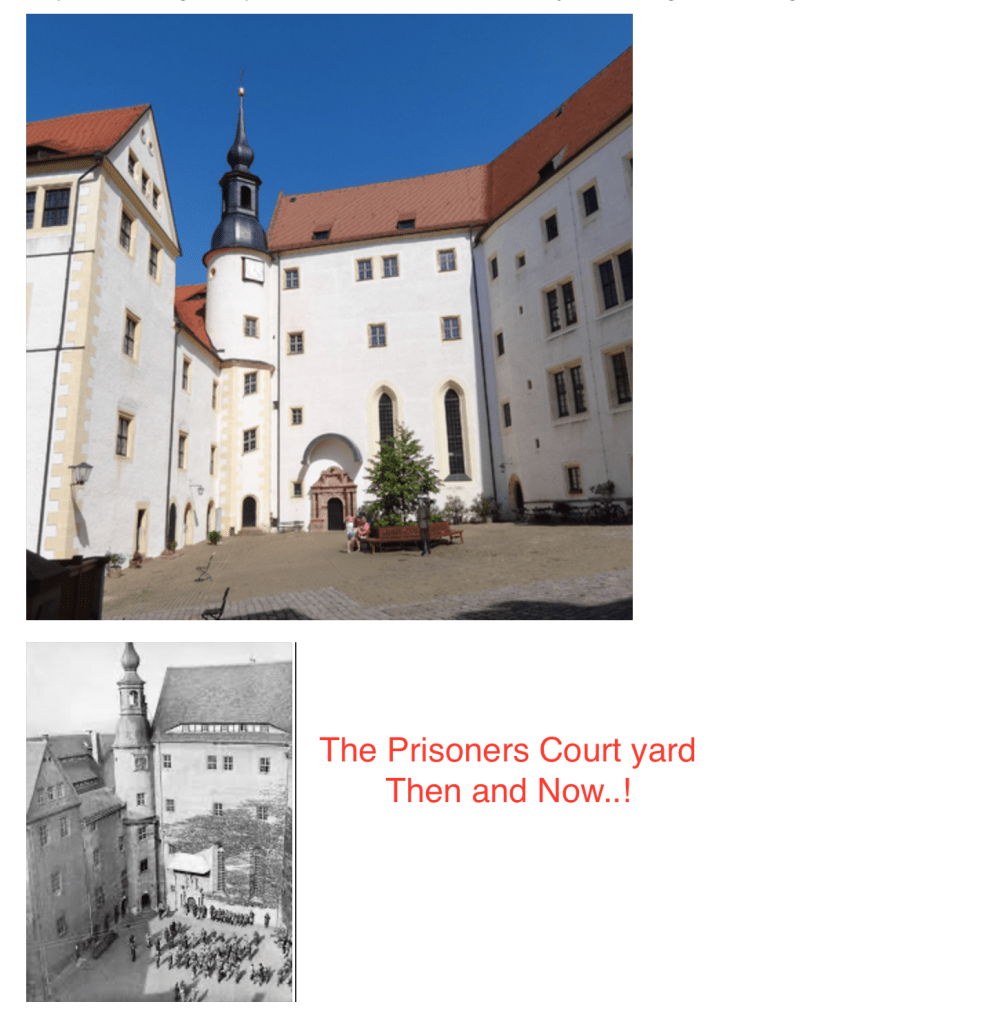
Once at one with my surroundings I decided to go look at the Canteen area as Five separate escapes centred on this location. Over the years much rebuilding has taken place and very little is left of the original Canteen. But on the floor is still the grate over the top of the Tunnel dug into the floor and the glimmer of hope for the thirteen British and Polish escapees. Sadly the escape was detected. And the harshest punishment was the escapees having to refill the tunnel again..!
My next stop was the great door way. This is the huge engraved chapel door way near to the Tower in the east corner of the Yard. There are a couple of great photos of prisoners by this door way. The “Laufen Six” – the first Englishmen in Colditz in 1940 (from the camp in Laufen/Austria), from left to right: Harry Elliot, Rupert Barry, Pat Reid, Dick Howe, Peter Allen und Kenneth Lockwood.
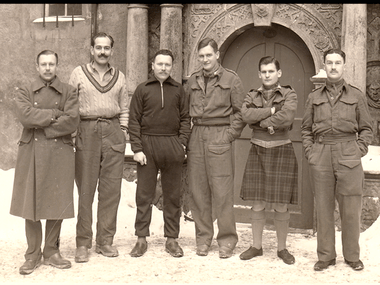
And there’s another great photo of the Camps senior officers stood by the Great Chapel Door.

I’m not at all sure if it was my engaging smile with the lady who sold me my ticket, great timing in arriving when I did or perhaps normal protocol. I truly have no idea. But I praise the luck that was bestowed on me by being given free reign to wander the Castle at my leisure.
As a guy I’m quite tactile, if I see something. I want to touch it..! If it’s edible taste it..! Walk on it, paddle in it. Climb up it..! I’m sure you get the idea..! Now I’m also sure that on normal trips and tours anywhere you are expressly forbidden from touching the objects. In most cases even from taking Photos..! The Souvenir shop has to make money some how..!
But for me this time it was not the case. I could wander everywhere look behind every door, touch anything I wanted. I was in tourist heaven. And so I did. I wanted to experience as much as I could. Actually be a part of what I had only read and watched. I would love to regale you with everything I got up too but that would take a book in its self.
What I will do is mention just a few things. There will be some people reading this that may feel you should not interact with historical things. And that perhaps I should not have done some of the things that I’m about to mention. In my defence all I can offer is that because of successive rebuilds very little original Castle working still exist. Walls are different, even doors and door frames are modern, except for but a few.
I shall start gently by saying that I’m probably the Last British Soldier to have trodden the boards of the Colditz Stage. As I’m mentioning the stage, I should say that from under it we achieved our first Home Run. a Home Run is a successful escape and return to Great Britain.
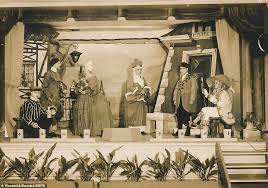
14: January 6, 1942
During the evening, four officers, operating in pairs, lowered themselves through a specially cut hole in the British theatre floor, descended into a unoccupied room, and walked out into a corridor that led over the main gate of the prisoners’ yard and into the empty attic over the German guardroom. Dressed as German officers, first one pair and then the other descended into and walked out of the unused guardroom. They walked under the archway into the German courtyard, and through the main gate. Wary of being stopped at the final gate beyond the moat, they turned east out of the main gate and, under cover of darkness, hopped over the wall along the park road. Though the Germans swiftly captured one pair, they did not get Dutch Lieut. Tony Luteyn and English Lieut. Airey Neave, the first Brit to flee successfully.
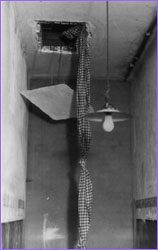
I also managed to drop into this Tunnel, but for the first ten inches its sealed.
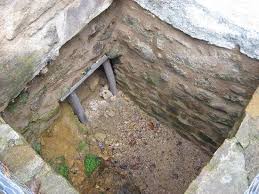
The French Tunnel under the chapel fares much better and you can see much deeper. (Were it permitted or even if it wasn’t a chap could get a body length and a half down that tunnel before it becomes impassable due to back fill.)
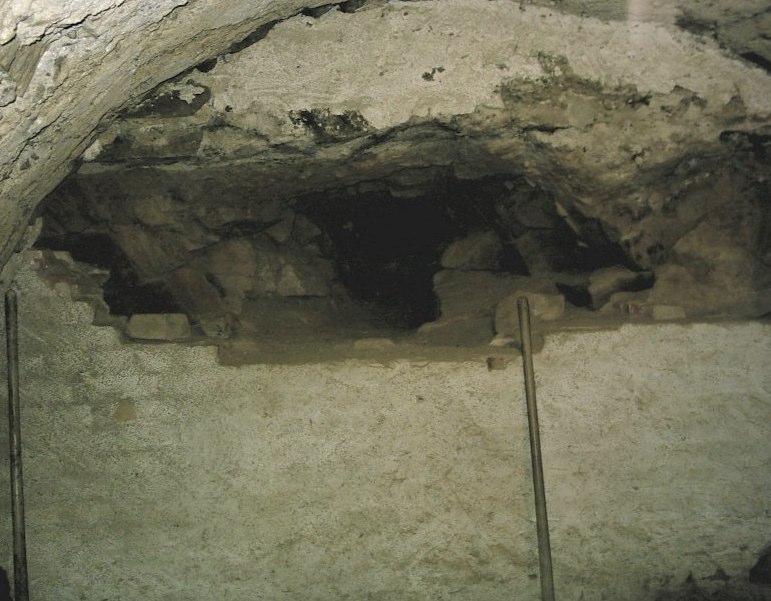
There is a wonderful solemnity found in any church or chapel. And Colditz Chapel is no different. It’s just that for a great length of time men were under the chapel digging a tunnel and sawing through huge oak beams that support the chapel interior.

It was nice to roam around the chapel, and soak in the silence. Sadly it is in a poor state of repair and needs a lot of work on it. On the south side of the church is a raised pulpit. I would have loved to climb up the few stairs into it and taken a photo or two. But the structure just didn’t look like it would be able to hold my weight. Once the church is fully restored it would be an awesome venue for weddings, christenings and the like. It was great to stand at the altar surrounded by so many ghosts and memories of people who were my boyhood heroes.
My next stop just because it was near, was the cafeteria. A rather small room, clean and modern with a sweet young lady serving hot beverages, sandwiches and cakes. From the cafeteria through one of the old great doors and down a few stairs is the terras where the British tunnel came out. Coffee in hand I descended to the terras.
I stood on the grassy area contemplating the achievements of Pat Reid and his fellow captives. Not only had they identified a weakness, exploited that weakness by digging a huge tunnel. They had tirelessly prepared thirteen escape packs for the British and Polish Officers who were going out that night. Money, food, forged papers, forged rail tickets, and thirteen sets of clothing..! But the whole endeavour for the escapees hung on the compliance of a bribed guard. He at a prearranged time was to patrol at the other end of the terras and see nothing. He was paid a Hundred Marks up front with a further six hundred to follow.

On the evening of 29 May 1941, Pat Reid hid in the prison canteen when it was locked up for the night. He removed the bolt from the lock on the door and returned to the courtyard. After the evening head count, the chosen escapers slipped into the canteen unnoticed. They entered the tunnel and waited for the signal to proceed. Unknown to the prisoners, they had been reported by the bribed guard. Waiting on the grassy area was Hauptmann Priem and his guard force.

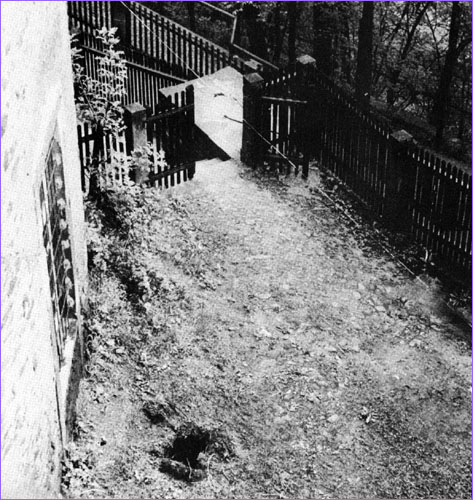
Pat Reid recalls:
“I climbed out on to the grass and Rupert Barry, immediately behind me, started to follow. My shadow was cast on the wall of the Kommandantur, and at that moment I noticed a second shadow beside my own. It held a gun. I yelled to Rupert to get back as a voice behind me shouted, Hände hoch! Hände hoch!. I turned to face a German officer levelling his pistol at me.”
From Pat Reid.
Hauptmann Priem as part of the punishment had the officers fill in the tunnel as he had the French officers fill in their tunnel too.
From my spot on the terras I could see it was just a few yards to the low wall. From here, they planned to climb down the hill, and drop down below the steep outside east wall of the castle. They were so close yet so far away. As a soldier of some twenty four years, I commend the Guard for doing his duty. He may well have been the enemy. But he did his duty and rightly he was rewarded with a promotion, a medal the war service cross and some leave.
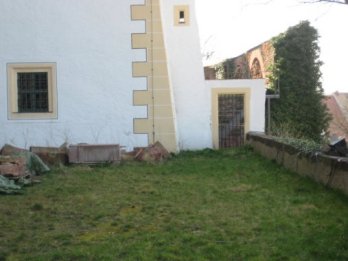
I spent some time on that grassy area trying to identify the tunnel exit, but time and weather had hidden it from all who seek it now. I recently found out that it is now under a Patio, as part of the cafe area of the Youth Hostel. Under this patio is where the Canteen Tunnel exit was. Unfortunately, this is another example of the gradual destruction of sites around the Castle which are of significant historical interest. In consolation from my vantage point on the grass it was possible to see the window that Dominic Bruce escaped from. When a new Commandant enforced rules restricting prisoners personal belongings. All excess belongings were to be packed into an assortment of chests provided. Dominic Bruce saw his chance and was packed inside a Red Cross packing case. Three feet square, with just a file and a 40-foot rope made of bed sheets. Bruce was taken to a storeroom on the third floor of the German Kommandantur and that night proceeded to make his escape.
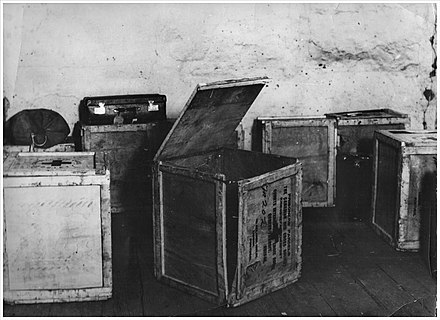
When the German guards discovered the rope dangling from the window the following morning they entered the storeroom and found the empty box on which Bruce had inscribed Die Luft in Colditz gefällt mir nicht mehr. Auf Wiedersehen! — “The air in Colditz no longer pleases me. See you later!” Dominic Bruce was captured a week later trying to sneak aboard a Swedish ship in Danzig. Another valiant attempt thwarted.

My free time to roam the castle was rapidly coming to an end as I had to get ready for my Official Tour. So popping my paper cup and sandwich wrappers in the bin. I headed off to meet my tour guide.
On my return to the ticket office the English speaking guide was ready. She was an engaging lady about 45 years old with a happy disposition. With dark hair if my memory serves me.
Her knowledge of the castle and its inmates was quite broad. Yet very factual. Her information was to the point, direct yet to me lacking emotion and colour. I never asked her from where she got her information from. But it felt like from only one source. When she for example explained an escape, we were presented with the facts. Not the preparation, execution nor aftermath.
What was very nice about the tour was there were just a few of us and we were permitted to photograph anything we wished. It wasn’t hurried and our guide answered any questions with a nice smile and the answer if she knew it. If she didn’t then she would refer you to seek information from the books sold at the shop, or the movies and documentaries that are available.
I’m not going to cover the guided tour beyond what I already have as I would like to keep to my solo interactions in the castle rather than any group endeavour. But I would like to personally thank our guide for the wonderful insight she gave us to this wonderful historic castle.
What I found really helpful from taking the tour was that I now knew where everything was. As the tour was completed back at the ticket office museum rooms my fellow English speakers walked off into the museum. I returned to OFLAG IV-C.
With my newly found knowledge of locations I returned to roaming the castle. One of the places I headed to first was the location of one of the hidden radio rooms. The only reliable information prisoners could obtain on the war was through BBC News broadcasts received via one of two radios which were hidden in the castle. These radios were smuggled in by French prisoner Frédérick Guigues and named “Arthur 1” and “Arthur 2”. A mole gave away the location of one of the radios, but the second remained hidden until Guigues returned and removed it during a tour of the castle in 1965. The prisoners’ “Radio Laboratory” was found until 1992 during repairs to a section of the roof.
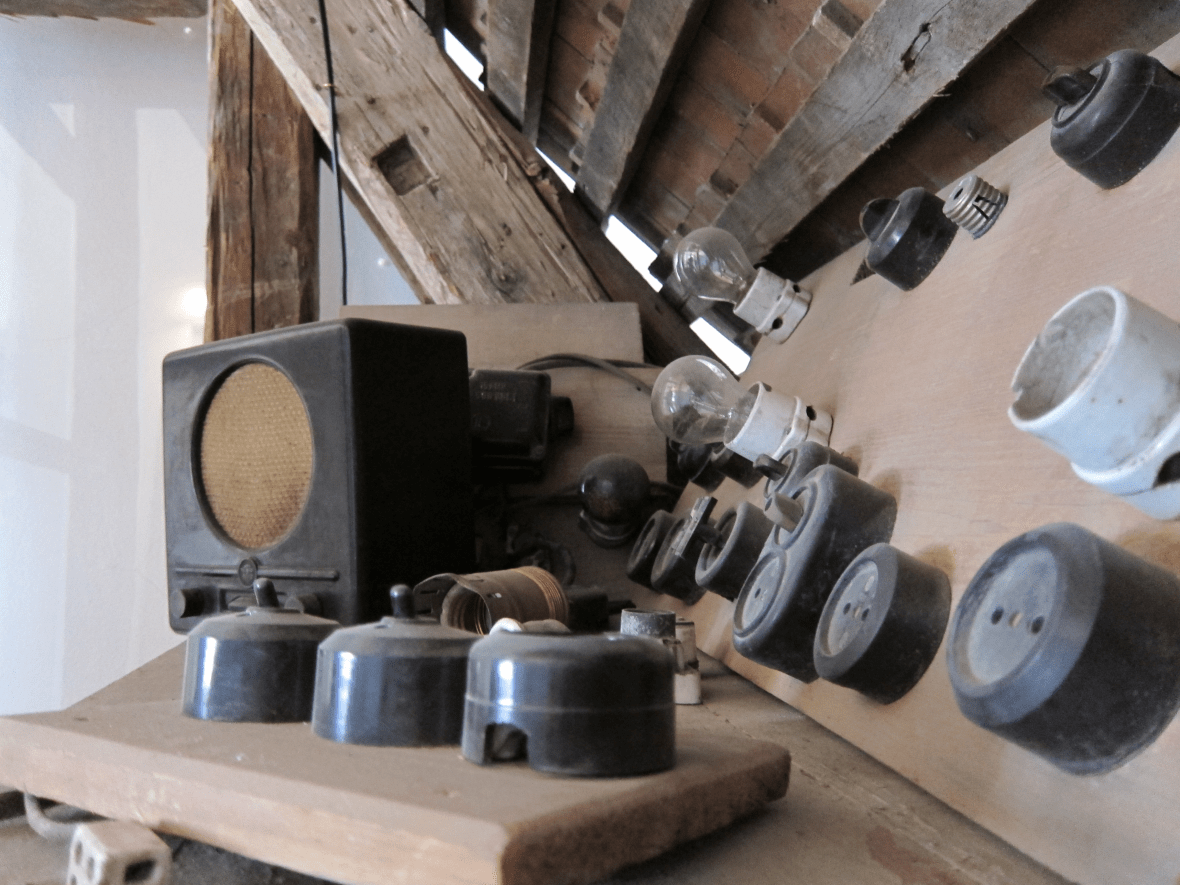
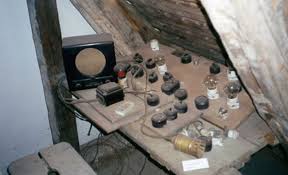
To be honest I feel with a good clean Arthur 2 would work today..! While it was in front of me I would have loved to have tried to get it to work. But my knowledge of electronics is sadly lacking. So I looked at it in awe, while sat on the stool. And with Ludwig Van Beethoven’s 5th Symphony in C Minor ringing in my ears I moved on to my next location. Why Beethovens 5th you might ask? Well that was the signal Broadcast over the BBC to mark the D Day invasion.
I suppose now is the time to tell you my only Beethoven joke…! When Beethoven passed away, he was buried in a churchyard. A couple days later, the town drunk was walking through the cemetery and heard some strange noise coming from the area where Beethoven was buried. Terrified, the drunk ran and got the priest to come and listen to it. The priest bent close to the grave and heard some faint, unrecognizable music coming from the grave. Frightened, the priest ran and got the town magistrate. When the magistrate arrived, he bent his ear to the grave, listened for a moment, and said, “Ah, yes, that’s Beethoven’s Ninth Symphony, being played backwards.” He listened a while longer, and said, “There’s the Eighth Symphony, and it’s backwards, too. Most puzzling.” So the magistrate kept listening; “There’s the Seventh… the Sixth… the Fifth…” Suddenly the realization of what was happening dawned on the magistrate; he stood up and announced to the crowd that had gathered in the cemetery, “My fellow citizens, there’s nothing to worry about. It’s just Beethoven decomposing.”
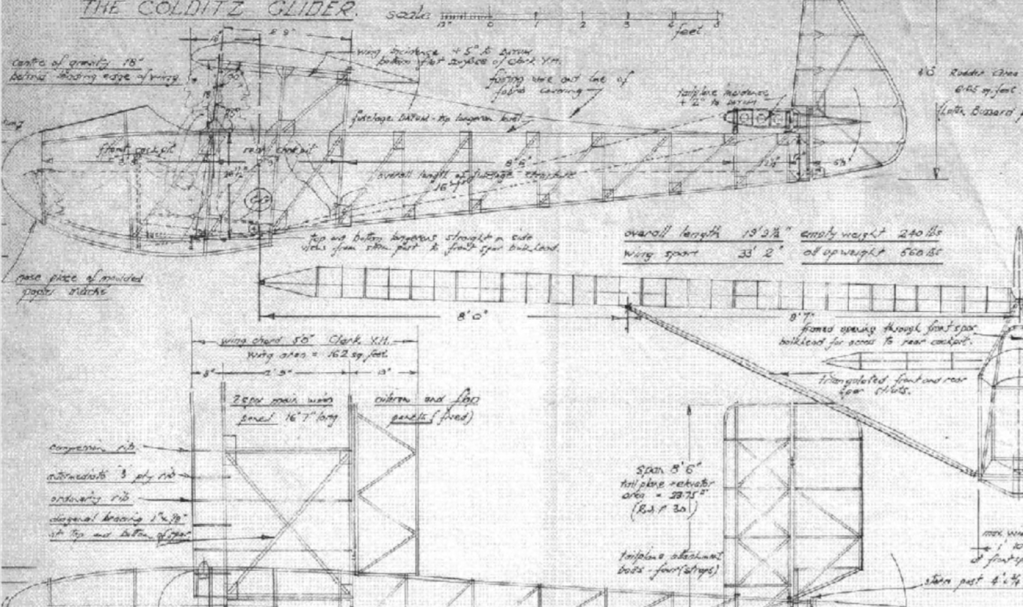
While still up in the roof area It was time to explore where the Colditz Cock was built. I find it intriguing that something as large as a two seater glider was built under the very noses of the guards hidden by only a false wall. The ingenuity of these inmates was truly astounding. The glider was assembled by Goldfinch and Best and 12 assistants known as “apostles”.

On entering the loft you quickly realise how tight a space the prisoners had to work in. I sat down on the floor resting my back against one of the two beams that are closest together. I had read all about this loft and the wonders performed in it. And now here I was surrounded in its mystery. How on earth could fourteen guys build an airplane in this tiny space. Yet in this loft they build a nearly twenty foot long sixteen foot wide aircraft. Contending with poor light, roof beams and in a cramped space behind a false wall. All while trying to be a quiet as church mice. There is only one known photo of the completed glider taken by an American Soldier shortly after liberation. Once the war was over the Castle and its contents were taken over by the Russians. So we have no idea what became of the Glider. For myself, from my spot on the floor. I could in my minds eye see Bill, Jack and the apostles working tirelessly to get one over the guards, and have a run for freedom.
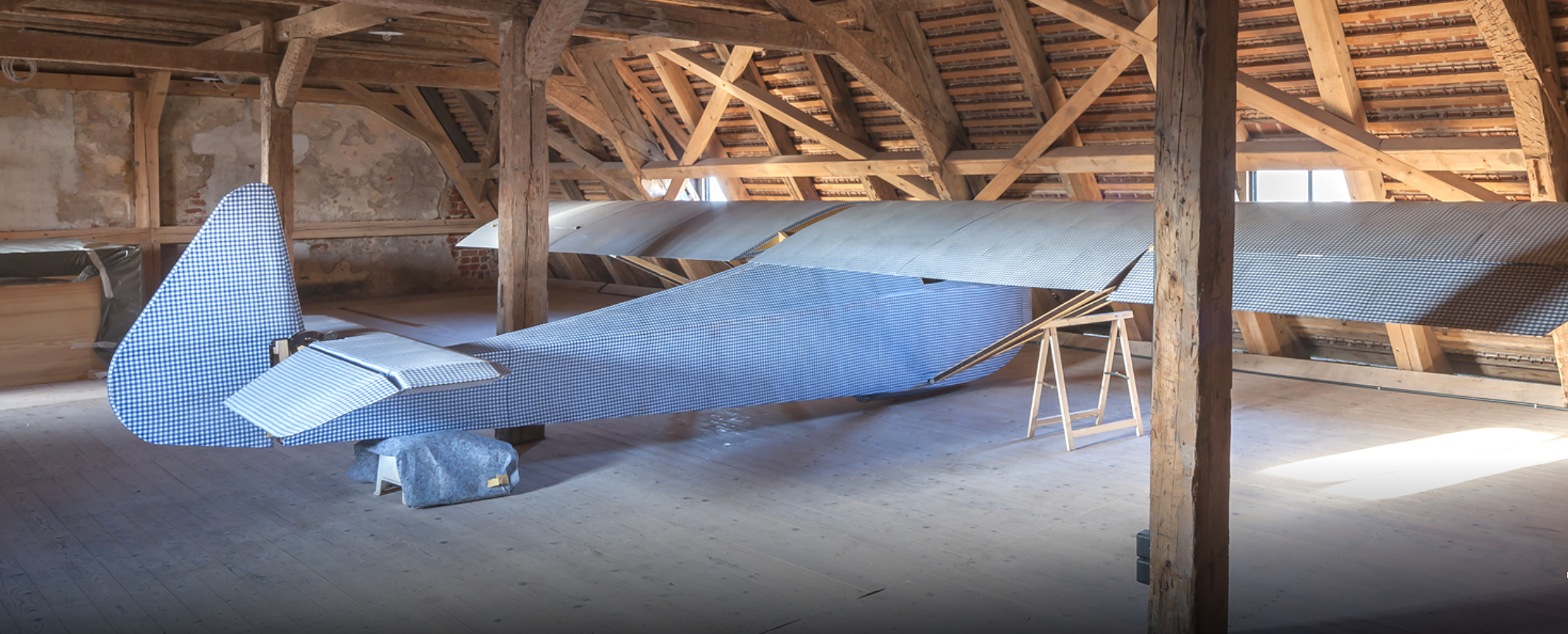


It’s my understanding that the Glider was not used as a means of escape because the war was drawing to a close and the senior officers and the escape committee did not want to endanger the lives of the prisoners. However it was ready to go if it was understood that the Gestapo or SS were ever going to enter the castle and start shooting the prisoners.
Great speculation and much debate has swung too and fro as to whether the glider would have actually flown. Even a glider expert, Lorne Welch, was asked to look over the plans and calculations. The original glider was made from any wood the prisoners could get. Floor planks as wing spars. Bed slats as wing ribs. The whole enterprise was then skinned in blue and white mattress covers that was then painted in a boiled millet porridge to seal the cloth pores. The whole glider weighed only 109kg.
Personally I feel that the “Would it have flown” issue has been put to bed. There have been several re-builds of the Glider. Also several flights of these copies have successfully been made. The more famous one off the Chapel roof of Colditz in 2012.


I truly applaud the ingenuity, skill, perseverance and good old fashioned hard work of all who helped build the Colditz Cock. It would have been a marvellous wonder had it been built on any airfield in the world, but to have scrounged every tool. Every bit of wood. Every piece of wire, cloth, nail, screw…! And complete the build, all while being under the scrutiny of prison guards beggars belief.
My time to wander was rapidly becoming short, I still had the return journey to Dresden to make. Yet there was yet another special place to visit. “The Park.” where being outside the castle no less than seventeen attempts for freedom were made.
Prisoners were formed up in their yard counted then marched through the German yard to the main gate. Recounted then marched over the moat, turned right a then it’s a short stroll downhill to the park.
During 1523, the Castle park was converted into one of the largest zoos in Europe. Yet when the prisoners were permitted to use it was in a highly guarded sectioned off area to the northern end of the park. My interest was not just in the Park, but also in the walk down to it. It is along this walk On 5 June 1941, while returning from the park to the castle, some British prisoners noticed that a passing lady had dropped her watch. One of the British called out to her, but the lady kept walking instead of retrieving her watch. This aroused the suspicion of the German guards and, upon inspection, “she” was revealed to be a French officer, Lieutenant Chasseurs Alpins Bouley, dressed as a very respectable woman.
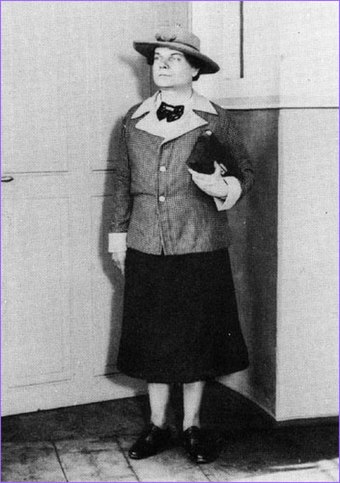
On 23: May 2, 1944. Half way down the road I was now walking, was an old garbage heap full of cans, cardboard, sticks, rags, and the like. The German Guards didn’t give it a thought as they walked passed it each day. That is until one day a prisoner was reported missing. During a rapid search outside the castle, guards came across a thin, fair-haired man trotting along a path in broad daylight. Tucked under his arm he carried a blanket covered with sewn-on cans, cardboard, sticks, rags. It was English Lieut. John Beaumont, who had hidden in and amongst the rubbish until he saw his chance to bolt over the wall in his bid for freedom. As I passed the spot it was now cleared of rubbish but held building material and scaffolding poles.
A few yards further and you come across a doorway, in the prisoners time this was a store shed for coal and wood. On one trip to the park, a fuss was made to distract the guards. And one of the prisoners tried the door and to his amazement found it unlocked. Several days later a bid for freedom was made from that very room.
Today the entrance to the park is secured by a padlock and you are escorted around by your guide. I was fortunate enough to visit before these measures were put in place. So I wandered the park on my own. I found the drain that was used for several attempts for freedom. Walked along the wall where Micheal Sinclair made his attempt resulting in his death. Security officer Eggers warned him after which Sinclair was fired upon by guards. A Bullet hit him in the elbow and ricocheted through his heart. The Germans buried him with full military honours. I took a few moments while strolling around to reflect on that tragic loss of life, and on the bravery and fortitude of the Eleven other prisoners who made their attempts from outside the Castle.
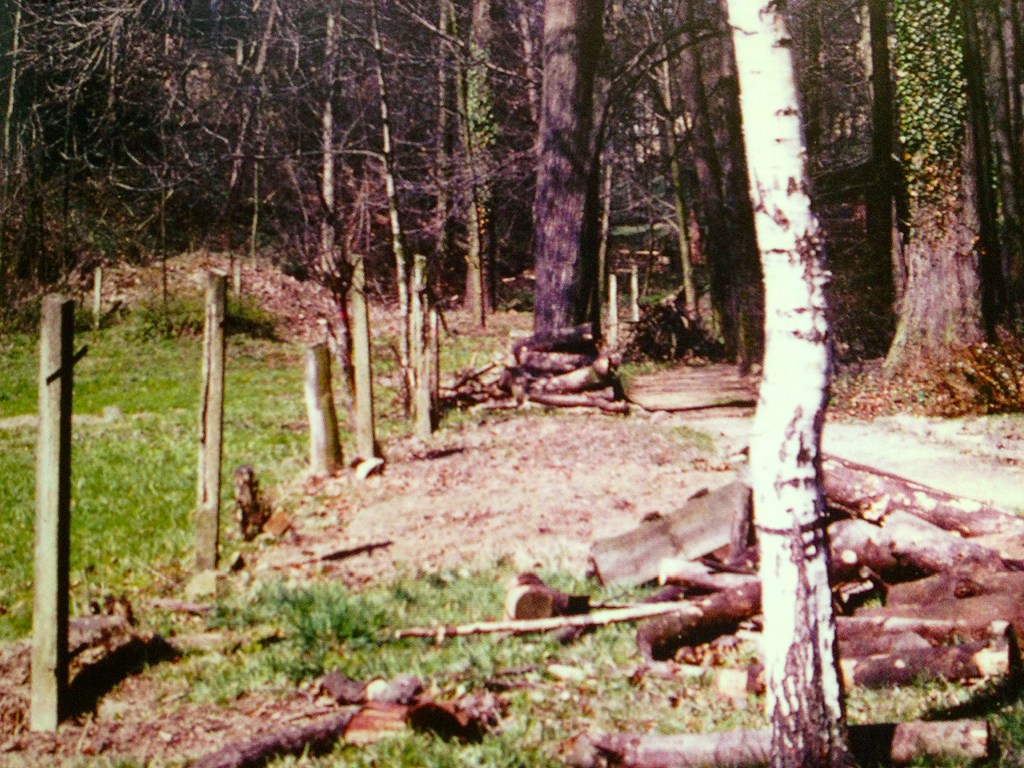
A quick glance at my watch told me that I had to get a move on. My time was swiftly running out. I still had to make time for a wander around the museum before my return to Dresden. So closing the gate behind me I bid farewell to the park with it’s triumphs and defeats and headed back up the hill to OFLAG IV-C. While walking up to the castle I thought about how the prisoners had fooled the guards into thinking the counts were correct. Not an easy task, Twenty prisoners enter the park.. you count heads, twenty prisoners walk back to the castle you recount heads. All is in order, the prisoners go back to their yard. A day or two later, or maybe at the next roll call you’re a prisoner down..! Well this is where Moritz came in..!
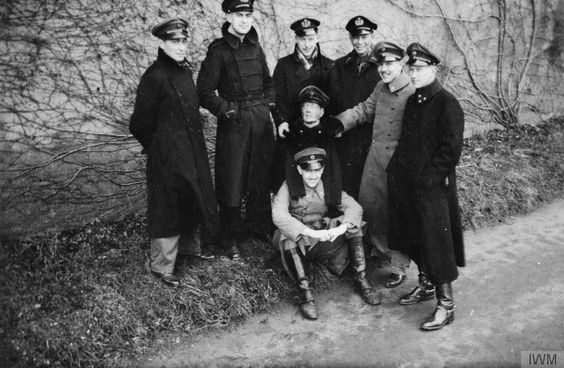
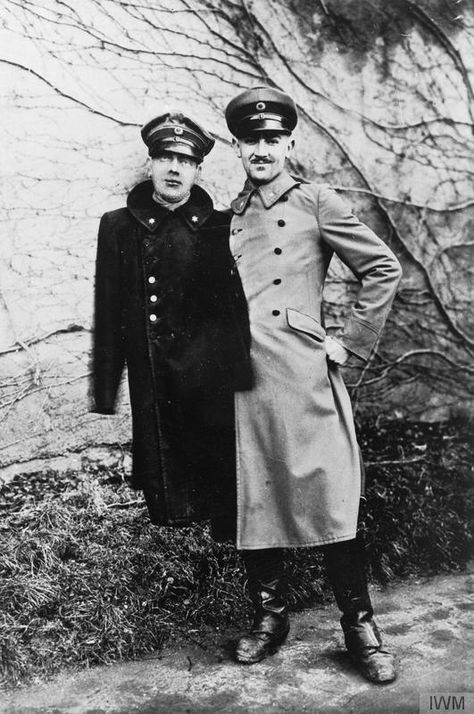
Moritz was a Paper mache head, hat and greatcoat that was assembled once a prisoner had hidden. In amongst a group of officers wandering around he became very passable and worked well for quite a while.
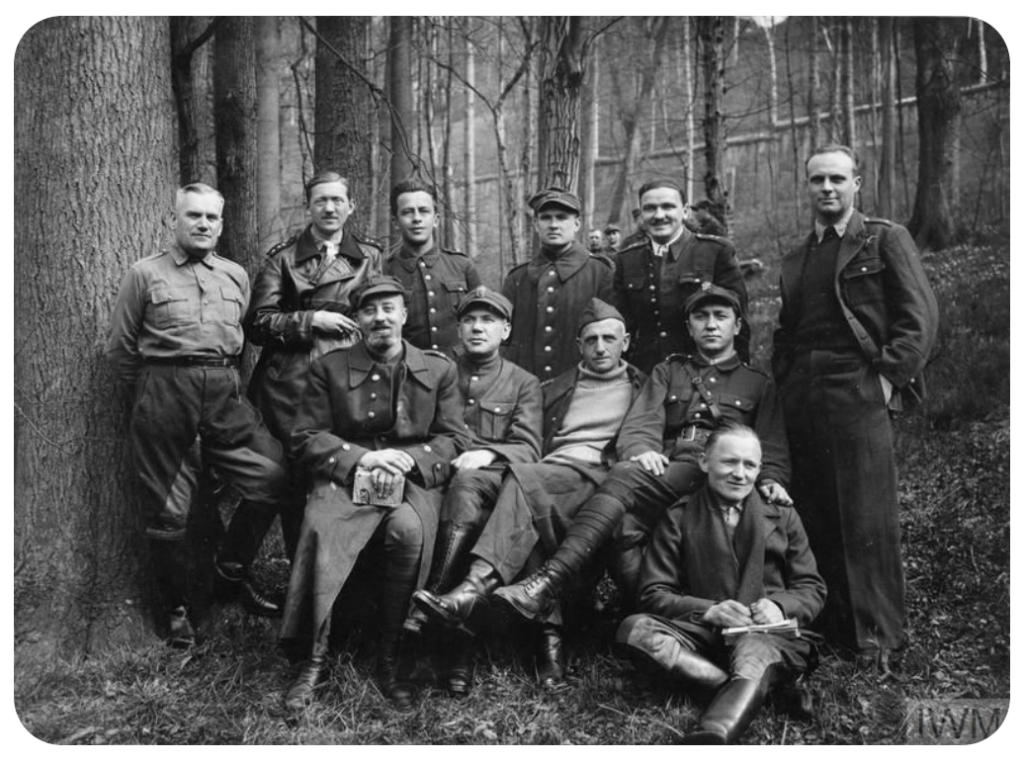
Colditz Museum is a wonderful place to visit, for me it was like being a Fatboy in a Cake Shop. Here I was surrounded by the wondrous things I had read about and watched depicted on the big screen.
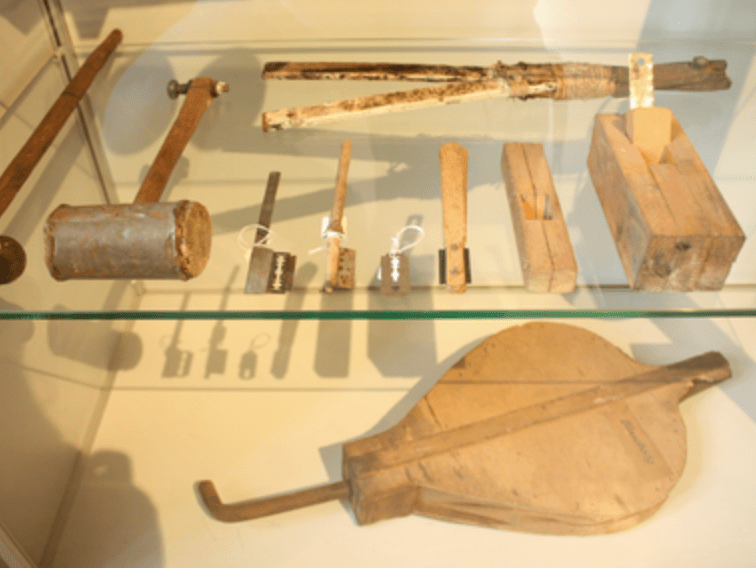
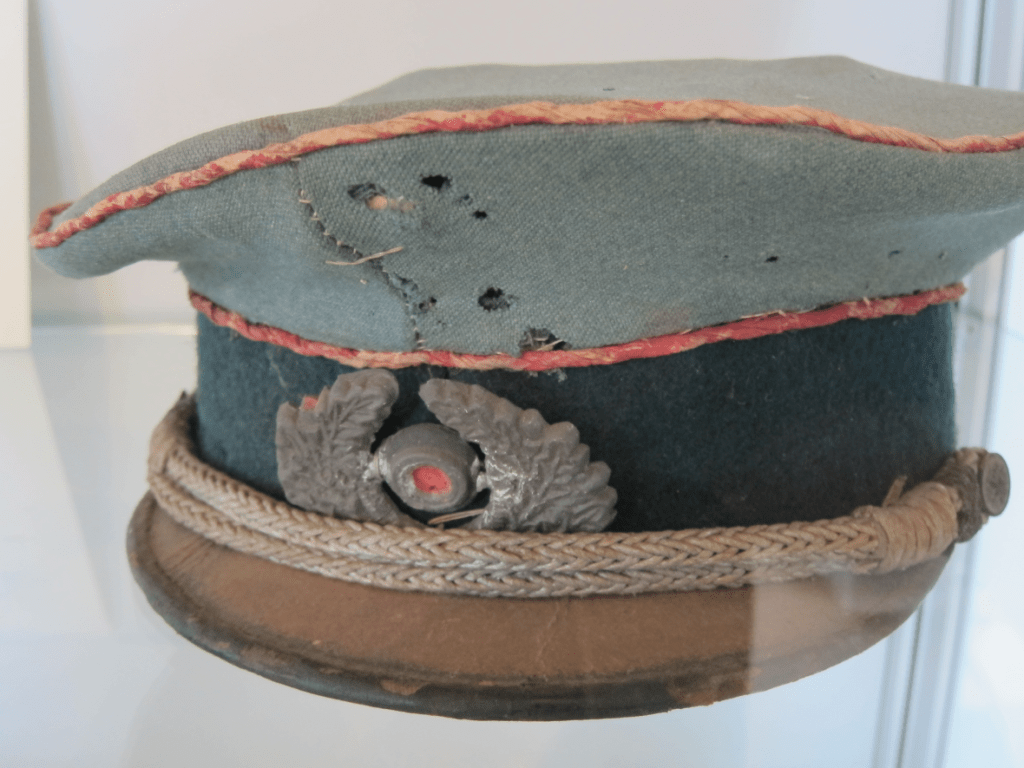
All great thing must come to an end, and the hands of time had turned as slowly as they dared for me. And I in their honour had wrung out every last memorable moment I could from this trip.
It was a very happy man that turned for the exit and started my stroll down the cobbles and through the main gates to my freedom, and my dash to Dresden. As I walked through the large arched tunnel, I could not help but smile one final time. On my left was a wooden door, this is the door to the guardroom. Where the keys to the main gate and entrance door were kept.
This thought now occurred to me. When the American army took Colditz Castle in 1945, two of the prisoners, Corran Purdon and Dick Morgan, asked to rejoin the fighting because they said they wanted to finish the war with rifles in their hands.
They fought with the American forces for a while but had to go back to Colditz to be repatriated. As he was finally preparing to leave Dick Morgan slipped away and came back with the keys safely stowed in his pocket. Years later when Dick died his widow sent the keys to his friend and fellow PoW Corran Purdon, a reminder of the escape-proof prison. He donated the keys to Royal Ulster Rifles Museum in Belfast. They are currently on loan to the Somme Heritage Centre.
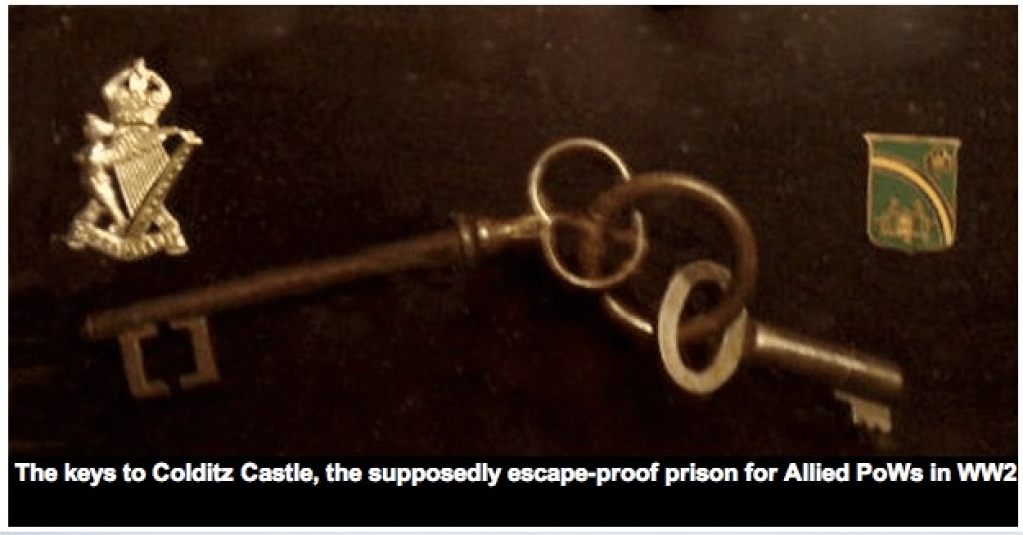
My smile broadened as I step though the Gate. Here was Germany’s supposedly most secure Prisoner Of War Camp ( Oflag IV-C) Now Permanently Open because a cocky Englishman walked away with the keys…Oh The Irony..!
 Chesty Traveling